
Why “SEO Optimized” Content Still Reads Terribly in 2026 (And What Actually Works)

You paid for “SEO optimized content.” But what came back reads like it was written for a search engine, because it was!
Real SEO copywriting does not read like that. You get the same 3 phrases repeated in almost every paragraph, sentences bent sideways to fit a keyword, and no real answer anywhere on the page.
And yea, you’re not wrong to be annoyed and you certainly aren’t the only one this happened to.
Here is how lopsided it has become. Semrush’s April 2026 study of 42,000 blog pages found human written content held the number 1 Google spot 80% of the time. Purely AI generated content held it 9%.
The word “SEO” itself has started to sound like a red flag to a lot of small business owners, and that is a real problem for an industry built on trust.
Table of Contents
Why “SEO Optimized” Became a Bad Word
“SEO optimized” started meaning a page built for an algorithm first and a reader second, and readers (unfortunately) can feel that the moment they land on one.
The habit came from a real, older tactic. Repeat the target phrase enough times and the page ranks or so was the thought process behind it.
That tactic is not just outdated but Google names it directly as a spam violation in its own Search Essentials spam policies, the same document every SEO writer is supposed to already know.
Google’s own words matter here. The policy names “blocks of text that list cities and regions that a web page is trying to rank for” and “repeating the same words or phrases so often that it sounds unnatural” as textbook examples.
So the writer padding a page with the same 4 word phrase is not gaming the system. They are handing Google a checklist of exactly what to flag.
| Pattern in the page | Why it backfires |
| Same exact phrase repeated every 2 to 3 sentences | Reads unnatural, matches Google’s own spam definition |
| A sentence bent to fit a keyword | Slows the reader down, raises bounce rate |
| No direct answer near the top | Reader leaves before finding what they searched for |
| Wall of text, no white space | Nobody finishes it, search engines notice low engagement |
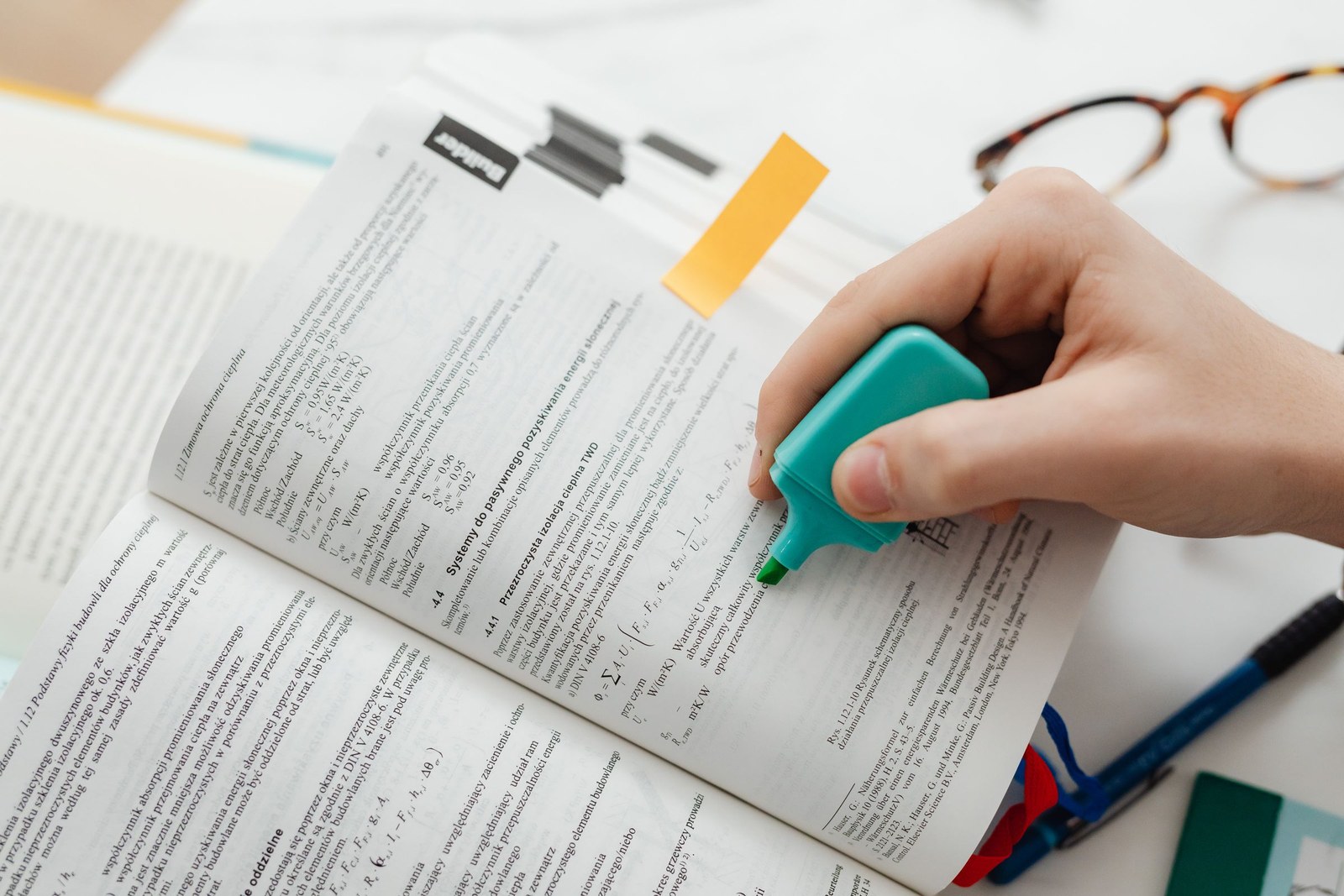
Dense text, marked up line after line, is how stuffed copy feels to read. Photo: Pexels.
What Keyword Stuffing Actually Costs You Now
Keyword stuffing costs rankings first, then trust, and the thing is the ranking cost is not just theoretical.
Because Google’s own spam policies are pretty blunt about the stakes; stating sites that violate them “may rank lower in results or not appear in results at all.”
Google also says it finds violations through automated systems and, as needed, human review, which “can result in a manual action.”
That is the worst case scenario, the more common cost is quieter but still real.
A page a reader cannot get through does not keep them on the site long enough to convert, and it rarely earns the kind of link or mention that actually builds authority over time.
| What keyword stuffing risks | Real outcome |
| Automated detection | Page ranks lower |
| Human review | Manual action from Google |
| Violation confirmed | Site can rank lower or drop out of results |
| Reader notices immediately | High bounce, low time on page, no return visits |
Here is the same idea, written 2 ways.
Stuffed: “Our SEO copywriting services offer the best SEO copywriting services for small business SEO copywriting needs.”
Rewritten: “We write content built to rank but importantly to actually get folks to read once someone clicks.”
One of those sentences sounds like a person talking to another person. The other sounds like it was assembled to satisfy a checklist, because it was.

Rewriting a stuffed sentence until a person would actually say it. Photo: Pexels.
The Real Data on AI Written Content vs. Human Written Content
AI written content is not automatically penalized, but pure AI content rarely wins the top spot, and human written content still makes its way to the top most of the time.
A Pew Research Center analysis published August 20, 2026 ran a random sample of 10,000 webpages from July 2026 through an AI detection model. 10% showed significant signs of AI authorship.
Among pages published since ChatGPT launched in November 2022, that share rises to over ⅓, according to the same Pew Research Center study.
So the assumption that “everyone is just using AI now and it works fine” is only half true. Plenty of that content is not performing.
What Semrush Found Across 42,000 Blog Pages
Semrush pulled the top 10 Google results for 20,000 keywords in November 2025, kept the 42,000 blog pages, and classified each as human written, AI generated, or mixed.
The result, published April 1, 2026: purely AI generated content held the number 1 spot 9% of the time. Human written content held it 80% of the time.
So that gap is anything but subtle. But the authors do not call AI useless either. Their own conclusion is that AI is no shortcut to the top of search.
In the same study’s survey of 224 SEO and content marketing professionals, 72% said AI assisted content performs at least as well as human written content in rankings.
Both things can be true at once. Unedited, generic, volume first content is the problem, not the tool that helped draft it.
How to Read These Numbers Honestly
Both studies lean on AI detection tools, while Pew warns that detection models can misclassify individual documents, which is why its findings rest on large collections of text.
Semrush’s authors make a similar point: the classifier “reads the finished product” rather than the production process.
So your job? Well, treat the numbers as a strong direction. A page that sounds human to a detector and to a reader is the one that holds up.
| Source | What it measured | Result |
| Semrush, April 2026 | Share of number 1 results, 42,000 blog pages | AI generated 9%, human written 80% |
| Semrush survey, 224 pros | AI assisted content ranks at least as well | 72% agree |
| Pew Research Center, August 2026 | Pages showing signs of AI authorship | 10% of sample, over ⅓ of post ChatGPT pages |

Where the numbers above actually show up: a real person looking at the page. Photo: Pexels.
What Google Actually Rewards Instead
Google rewards content that answers the question completely and shows a real person’s judgment behind it, not content that hits a keyword density number (especially since the advent of LLMs).
Ahrefs ran its own study on 20 random keywords, comparing page rankings against the content scores from 5 popular optimization tools, including Surfer, Frase, NeuronWriter, Clearscope, and its own AI Content Helper.
The result was “weak correlations everywhere,” and Surfer, Frase, and Clearscope showed very weak ones.
Most business owners assume there is a hidden formula, a density percentage or a word count target that guarantees a ranking if you just hit the number.
That’s the thing, there is no such number. Ahrefs’ authors say a content score can still help as one factor you control, but they advise against obsessing over a perfect score, and they note that scores cannot help you write anything unique.
What Google’s own public guidance asks instead is whether a page covers a topic completely enough that a reader does not have to go somewhere else afterward.
That is a harder standard than a keyword count, and it is also the one content writing built around real research and a real point of view can meet, where a keyword template cannot.

A page that answers the question is a page people actually finish. Photo: Pexels.
How to Write Content That Ranks and Doesn’t Read Like a Robot
The fix is not complicated, it just takes more real work than pasting a keyword into a template 12 times.
- Answer the actual question in the first 2 to 3 sentences. Do not build up to it. A reader and an AI search engine both leave a page that makes them wait.
- Use the keyword once, naturally, in the places that matter: the title, one heading, and the opening. Never force it into every paragraph.
- Add something only a real person doing this work would know. A specific number, a named source, or a direct example. That is the part a template cannot fake.
- Read it out LOUD before publishing. If a sentence sounds bent to fit a phrase, it needs to be rewritten without a second thought.
- Cut anything that exists only to hit a word count. A shorter page that answers the question completely beats a longer one made to look thorough.
A resource constrained founder/entrepreneur does not need a content team to do this. It needs one person willing to write the honest answer first and worry about the keyword second.
If you want to see what this looks like against your own site (certainly not a generic template), email me directly or fill out the form here and I will walk through what your current content is actually doing for you.

Writing the honest answer first, and the keyword second. Photo: Pexels.
Real Questions About SEO Copywriting, Answered
Does keyword density still matter for SEO in 2026?
Not as a number to hit. Ahrefs’ test of 5 content scoring tools across 20 keywords found “weak correlations everywhere” between a high score and a top ranking, so there is no density formula to chase. Use the keyword once naturally in the title, a heading, and the opening, then write for the reader.
How do you write for SEO without it sounding robotic?
Answer the reader’s actual question in the first 2 to 3 sentences, then add one detail only someone who does this work would know, like a specific number or a named source. Google’s spam policy names repeating the same words or phrases so often that it sounds unnatural as a violation, so use the keyword once, not 12 times.
Is AI written content automatically penalized by Google?
No, but using AI “with the primary purpose of manipulating ranking in search results” violates Google’s spam policies, per its February 2023 guidance on AI content. Semrush’s April 2026 study of 42,000 blog pages found purely AI generated content held the number 1 spot 9% of the time, against 80% for human written content.
What actually happens to a site that gets caught keyword stuffing?
Google’s spam policies say sites that violate them “may rank lower in results or not appear in results at all,” and violations are caught by automated systems and human review that can result in a manual action. Keyword stuffing is named in those policies as a violation, so a flagged page can lose visibility or disappear from results.
How much of the content online right now is actually written by AI?
About 10% of webpages, based on Pew Research Center’s analysis of a random sample of 10,000 pages collected in July 2026 and published August 20, 2026. Among pages published since ChatGPT launched in November 2022, over ⅓ show signs of AI authorship. Pew warns detection models can misclassify individual pages.
Can a small business write its own SEO content without hiring someone?
Yes, for a first pass, but it takes longer than most owners expect. My view: skip the keyword count, write the direct answer to the searched question in your first sentence, then add one detail only you know. Semrush’s April 2026 authors recommend spending saved drafting time on expert insights and proprietary data, which a founder already has.
What is the actual difference between content written for Google and content written for a person?
Content written for Google repeats a phrase and pads length to hit a target. Content written for a person answers the real question fast, uses the keyword once naturally, and adds a specific detail a template could not produce. The second kind is also what Google’s own guidance on helpful content asks for, since it rewards complete, original answers over keyword density.