
Content Strategy for Nonprofits: How a Small Team Builds Trust Without Burning Out
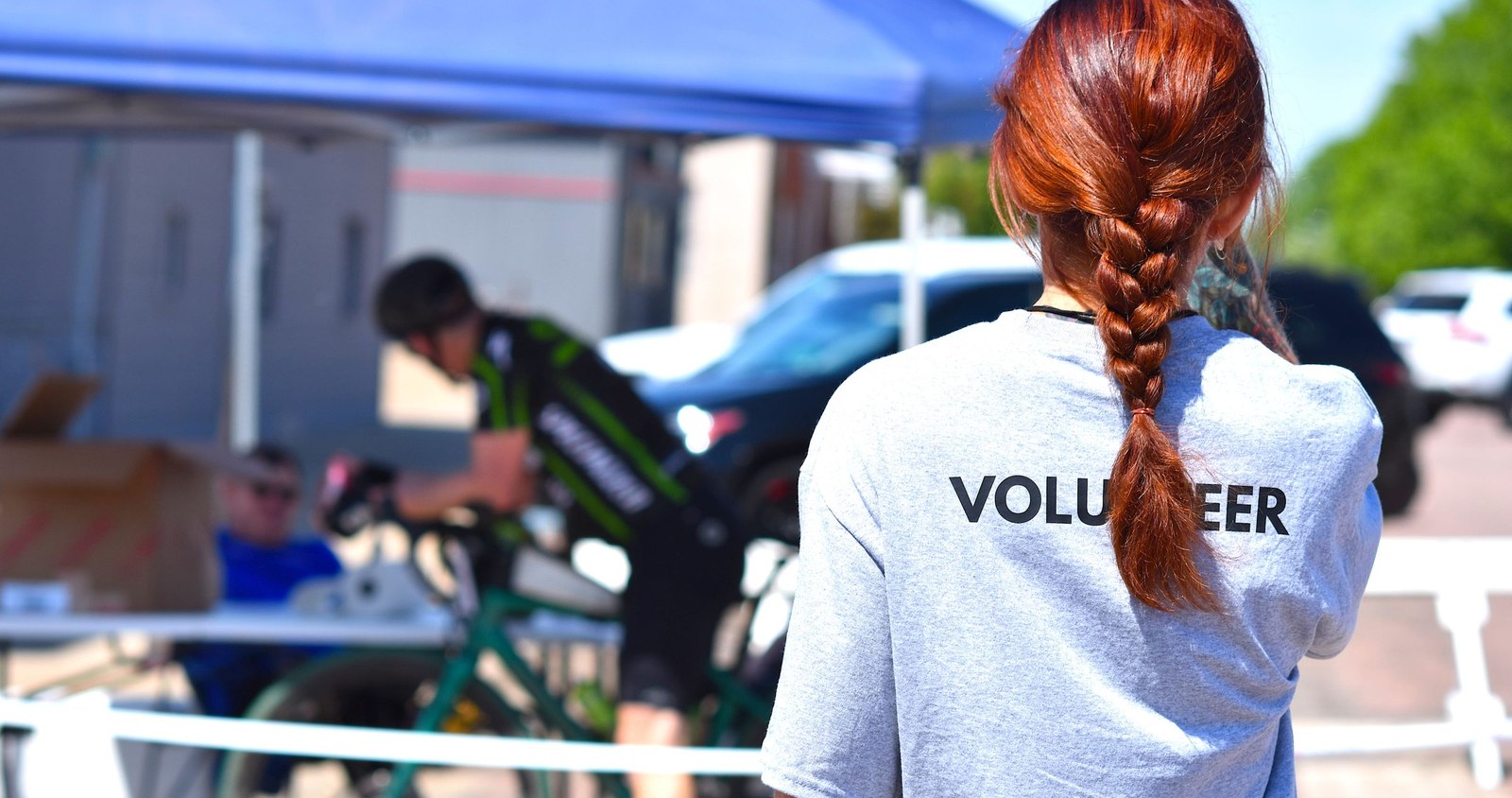
You run programs all day. Then around 9pm the newsletter, the donor email, and the website update land on your plate too.
That is not a writing problem a longer to do list will fix. Content writing for a small team only works when it is built around the hours you really have, not the hours you wish you had.
And you are in good company. Candid’s May 2025 analysis found nearly 60% of U.S. nonprofits are very small, with budgets below $50,000.
So the question is not how to post more. It is how to protect the one thing a small nonprofit runs on, which is trust.
Trust is the one line item you cannot afford to overdraw.
Table of Contents
- Why Trust Is the Budget Line You Can’t Overdraw
- What Losing Trust Looks Like: Donors Who Never Come Back
- Your Capacity Is Smaller, So Your Plan Has to Be Too
- Put Your Cards on the Table: Say What You Cannot Promise
- A Content Plan a Team of One Can Actually Keep
- Real Questions About Content Strategy for Nonprofits, Answered
Why Trust Is the Budget Line You Can’t Overdraw
Trust is the real asset of a nonprofit, because donors, volunteers, and families give on the strength of it long before they read an annual report. Most of what you publish either adds to that account or draws it down.
Independent Sector’s July 2025 trust report found 57% of Americans trust nonprofits to do what is right, from a survey fielded in April 2025.
That beat small business at 42%, the news media at 20%, and the federal government at 18%.
So you start from a strong place. But a strong starting point is easy to waste (a single overpromising post is plenty).
And trust has a fragile edge. When respondents were told a significant share of an organization’s funding came from government, trust fell from 57% to 38%, as Nonprofit Quarterly reported.
Yet 56% of those same respondents said government funding is essential to a healthy sector. So the money was never the issue, the context was, and the thing to do is tell people where your funding comes from before somebody else does.
| Institution | Share of Americans who trust it |
| Nonprofits | 57% |
| Small business | 42% |
| News media | 20% |
| Federal government | 18% |

Trust gets built one honest conversation at a time, and one honest page at a time. Photo: Pexels.
What Losing Trust Looks Like: Donors Who Never Come Back
Losing trust shows up as donors who give once and quietly disappear. The Fundraising Effectiveness Project’s Q4 2025 report put overall donor retention at 43.3%, which means more than half of the previous year’s donors did not give again.
That figure comes from DonorPerfect’s summary of the report, and it is up only slightly from 43.1% a year earlier.
Most small teams assume retention is won by the thank you call and the year end appeal. Those matter, but donors also read what you publish between the asks.
My view is that every vague post, every number you cannot back up, and every “transformed lives” line with no detail hands a donor a small reason to wonder.
And donors are what keep the lights on, so a small reason to wonder is not small at all.
Between the asks, 3 kinds of update cost very little and say a lot:
- A progress note. What happened this month, in 3 sentences.
- A what we learned note. Including the part that did not go to plan.
- A thank you with detail. Name what the gift made possible (with permission).

The thank you note matters, and so does everything you publish in between. Photo: Pexels.
Your Capacity Is Smaller, So Your Plan Has to Be Too
A small team cannot match a big team’s output, and it should not try. It can match them on specificity and honesty, which cost no extra hours.
Candid’s data shows how wide the capacity gap runs. Between 2019 and 2023, only 22% of very small nonprofits received at least one foundation grant, against 72% of other nonprofits.
They also received just 0.4% of the foundation funding in that period.
Candid’s own read is that very small nonprofits “have limited resources and capacity to look for and apply for foundation grants.”
| Source | What it measured | Result |
| Candid, May 2025 | Very small nonprofits (budgets under $50,000) as a share of U.S. nonprofits | Nearly 60% |
| Candid, May 2025 | Very small nonprofits receiving at least 1 foundation grant, 2019 to 2023 | 22%, against 72% of other nonprofits |
| Candid, May 2025 | Share of foundation funding they received | 0.4% |
What a Small Team Can Match
You cannot out publish a team of 10, so don’t bite off more than you can chew. But you can be the clearest, most specific voice in your corner of the sector.
Specific beats polished every time (a named situation, a real number, an honest “we’re still learning”).
So the plan has to be smaller on purpose, and that is a strength, not a compromise.

A team of 1 does not need a bigger plan. It needs a smaller promise. Photo: Pexels.
Put Your Cards on the Table: Say What You Cannot Promise
The fastest trust move for a small team costs nothing: say plainly what you do, what you do not do, and what you do not know yet. Readers will forgive a small footprint, but not a stretched claim.
Here is the same idea, written 2 ways.
Overpromised: “Our program transforms every life it touches.”
Honest: “Our program supports families through weekly sessions. Here is what we have seen so far, and what we are still learning.”
One of those you can defend when a donor asks a follow up question. The other you can’t.
A Worked Example: How RHEMA Says What It Is Not
I worked with RHEMA Innovations, a team developing a wearable that turns speech into patterns of touch, so Deaf and DeafBlind people can feel spoken language.
I know the owner personally. He is bound by his morality and tries to get the price as low as he can, free if it were possible. They work more or less like an NGO.
The price only covers the basic cost of the device.
You can see that on RHEMA’s evaluation page, which does something most mission pages skip. It states the price (US$200), says no payment is due with the application, and states, word for word: “Evaluation model only; not a medical device or guaranteed communication solution.”
It also promises that selected families receive written scope and terms before payment.
3 Things Worth Copying
- The limit sits right next to the offer. Nobody has to scroll or guess.
- The cost is stated up front. No surprise at the end.
- The next step is promised in writing. The reader knows what happens before they commit.
The same rule applies if your team uses AI to keep up with the workload. Kindsight’s 2025 donor survey of 1,031 donors found 92% want clear explanations of how AI is used.
| Instead of | Try |
| “Guaranteed results” | What you offer, and what you cannot promise |
| “Transforming lives” | One specific change, with the detail |
| Saying nothing about AI | One line: a person checks every fact before it goes out |
None of this is about looking smaller than you are. It is about being believed.

Clear communication starts with knowing who you are speaking to. Photo: Pexels.
A Content Plan a Team of One Can Actually Keep
A plan a team of 1 can keep is smaller than you think: 1 channel, 1 real story a month, a fixed rhythm, and a short note on what you do not know yet.
- Pick 1 channel and say no to the rest. Your email list or your website, not both plus 3 social accounts.
- Write 1 specific story a month. A real situation (with permission), what changed, and what is still unsolved.
- Put it on the calendar like a program. Same day every month. A date you keep beats a burst you can’t.
- Say what you do not know yet. It costs nothing, and it keeps every other claim believable.
- Reuse, don’t restart. One story becomes 1 email, 1 post, and 1 paragraph for the next grant application.
And when the hour is already gone, here is what to cut first: the social accounts you cannot keep fresh, then the weekly newsletter (make it monthly), and last of all the story. The story is the last thing I would cut.
The thing is, none of this needs a bigger budget. It needs a smaller promise, kept.
And if your site still reads like a sales page, my post on why ministry and nonprofit websites shouldn’t read like a SaaS homepage is the next stop.
If you need help turning this into a plan for your team, you can email me directly or fill out the form here, and we can try to figure out what 1 person can realistically keep.

One story a month, written into the calendar like a program. Photo: Pexels.
Real Questions About Content Strategy for Nonprofits, Answered
What is a content strategy for a small nonprofit?
It is a short written plan that names who you write for, which 1 channel you use, how often you publish, and who owns it. Candid’s May 2025 data shows nearly 60% of U.S. nonprofits have budgets under $50,000, so the plan has to fit 1 person’s hours, not a team’s.
How much content can a small nonprofit team realistically produce?
My view is 1 real story and 1 email a month, so 12 stories a year, is the most a team of 1 can keep without it slipping. A steady 12 beats a burst of 40 followed by months of silence, because donors notice the gap.
How trusted are nonprofits right now?
57% of Americans trust nonprofits to do what is right, according to Independent Sector’s July 2025 report. That is well ahead of small business at 42%, the news media at 20%, and the federal government at 18%, as Nonprofit Quarterly’s coverage laid out.
What is a normal donor retention rate for nonprofits?
About 43.3% overall, according to the Fundraising Effectiveness Project’s Q4 2025 report, up slightly from 43.1% a year earlier. That means more than half of the prior year’s donors did not give again, which is why steady, honest updates between asks matter.
Should a nonprofit tell donors it uses AI to write content?
Yes, plainly and briefly, in a sentence near the content itself. Kindsight’s 2025 Donor Perceptions of AI report, based on 1,031 donors, found 92% want clear explanations of how AI is used. A single line saying a person checks every fact before publishing costs nothing and answers that.
What should a nonprofit communications plan include?
At minimum, your audience, 1 or 2 goals, the channels you will actually use, a fixed rhythm, an owner, and a review date. The Nonprofit Marketing Guide’s 2026 Communications Trends Report, a survey of 322 participants, covers goals, team roles, email, social, AI, and accessibility, which makes a useful checklist.
How can a small nonprofit compete for grants without a communications team?
By being more specific, since capacity is the gap. Candid found only 22% of very small nonprofits received a foundation grant between 2019 and 2023, against 72% of others, so a single clear, honest, well documented story can carry more weight than extra posts.