
How to Write an About Page That Gets Clients to Call (With Before and After Examples)

A friend gave a stranger your name, so they opened your site and went looking for the page that says who you are. That page is your About page, and it’s usually the website copywriting nobody got around to doing well.
And it matters more than it looks. In September 2026, TrustedFirms.io surveyed 1,146 US adults and 87.7% said they have passed on a business because they couldn’t find enough about it online.
Nearly 9 in 10 people. From the visitor’s side, “not enough information” is exactly what a thin About page looks like.
So here’s how to write one that earns the call, with before and after lines you can borrow.
Table of Contents
- What Should an About Page Actually Do?
- What Do Weak and Strong About Page Examples Look Like?
- How Do You Write an About Page, Step by Step?
- Should an About Page Have a Real Photo and Real Details?
- Does Your About Page Help You Show Up on Google and in AI Answers?
- How Do You Know If Your About Page Is Working?
- Real Questions About Writing an About Page, Answered
What Should an About Page Actually Do?
An About page should answer 3 questions fast: who are you, can you solve my problem, and what do I do next. Everything else (the origin story, the awards, the dog photo) is support for those 3. If a visitor can’t answer them from the first screen, the page has failed, however well it’s written.
Buyers go looking for it. In KoMarketing’s 2015 B2B Web Usability Report, 52% of business buyers wanted to see About or company information once they reached a vendor’s homepage.
Nielsen Norman Group’s research on About Us pages adds the other half. People skim the top level of the page for basics, and visitors treat a site that answers quickly as transparent, and one that buries the answer as evasive.
| What the visitor asks | What they need to see | Where it belongs |
| Who are you? | Your name, your face, what you do in one sentence | Top of the page |
| Can you solve my problem? | The kind of client you help, in their words | Right under the headline |
| What do I do next? | 1 clear step, the form or an email | The end, and once near the top |
Most first visits start like this: one thumb, one phone, a little patience. Photo: Pexels.
But the page has one more job nobody mentions, and the thing is, it can’t do it alone.
The same TrustedFirms.io survey found 68% of people check a business’s website before they spend money, while only 13% said a professional website is the signal that earns their trust most. Reviews took 55.6%.
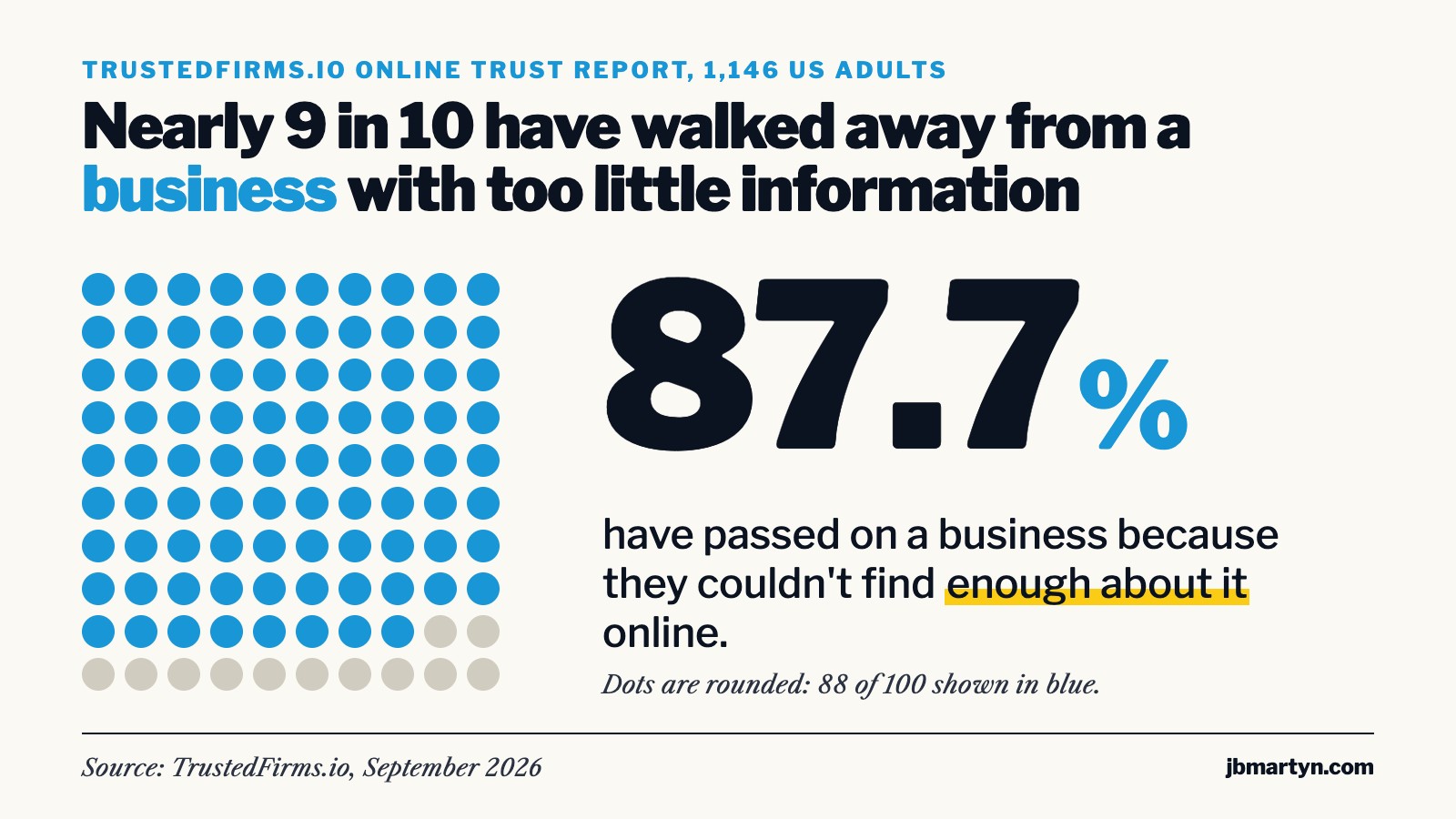
Nearly 9 in 10 walk away when the information isn’t there. Custom graphic.
What Do Weak and Strong About Page Examples Look Like?
A weak About page talks about the owner. A strong one talks about the reader’s problem and uses the owner as proof it can be solved. Same facts, flipped around, and you can hear the difference in the first sentence.
Most advice says to tell your story. Fine. But a story is 1 part of the page, not the whole thing, and visitors rarely arrive cold.
BrightLocal’s 2026 Local Consumer Review Survey of 1,002 US adults found that after reading positive reviews, 54% visit the business’s website. In 2019 that number was 32%.
So more of your readers show up already half sold, checking whether you’re real. A page that spends its first 300 words on your childhood gives them a reason to back out.
Think of the reader as the hero and yourself as the guide. Copyhackers’ advice on About pages says the same: write for 1 imagined reader and cut any detail that doesn’t help that reader trust you.
Here are 4 lines I see on About pages all the time, next to rewrites. (The bookkeeper in the rewrites is an example I made up for this post, not a client.)
| Weak line | What the visitor hears | Stronger line |
| “Welcome to our website!” | A template | “I’m Dana, and I do bookkeeping for consultants who hate spreadsheets.” |
| “Founded in 2009 with a passion for excellence.” | A date and a slogan | “Most of my clients are small firms who call when the shoebox of receipts gets out of hand.” |
| “We take a holistic, client first approach.” | Jargon | “You send me receipts on Friday, and by Tuesday you have a report you can read in 5 minutes.” |
| “Contact us to learn more.” | A shrug | “Tell me what’s piling up, and I’ll tell you if I can help.” |
The right column is also simpler to read, and that’s no accident. Unbounce’s 2024 Conversion Benchmark Report, covering 57 million conversions across 41,000 landing pages, found pages written at a 5th to 7th grade level convert at 11.1%, against 5.3% for professional level writing.
It also found a 24.3% negative correlation between difficult words and conversion rate. Those are landing pages, not About pages, but the lesson travels: plain words win.
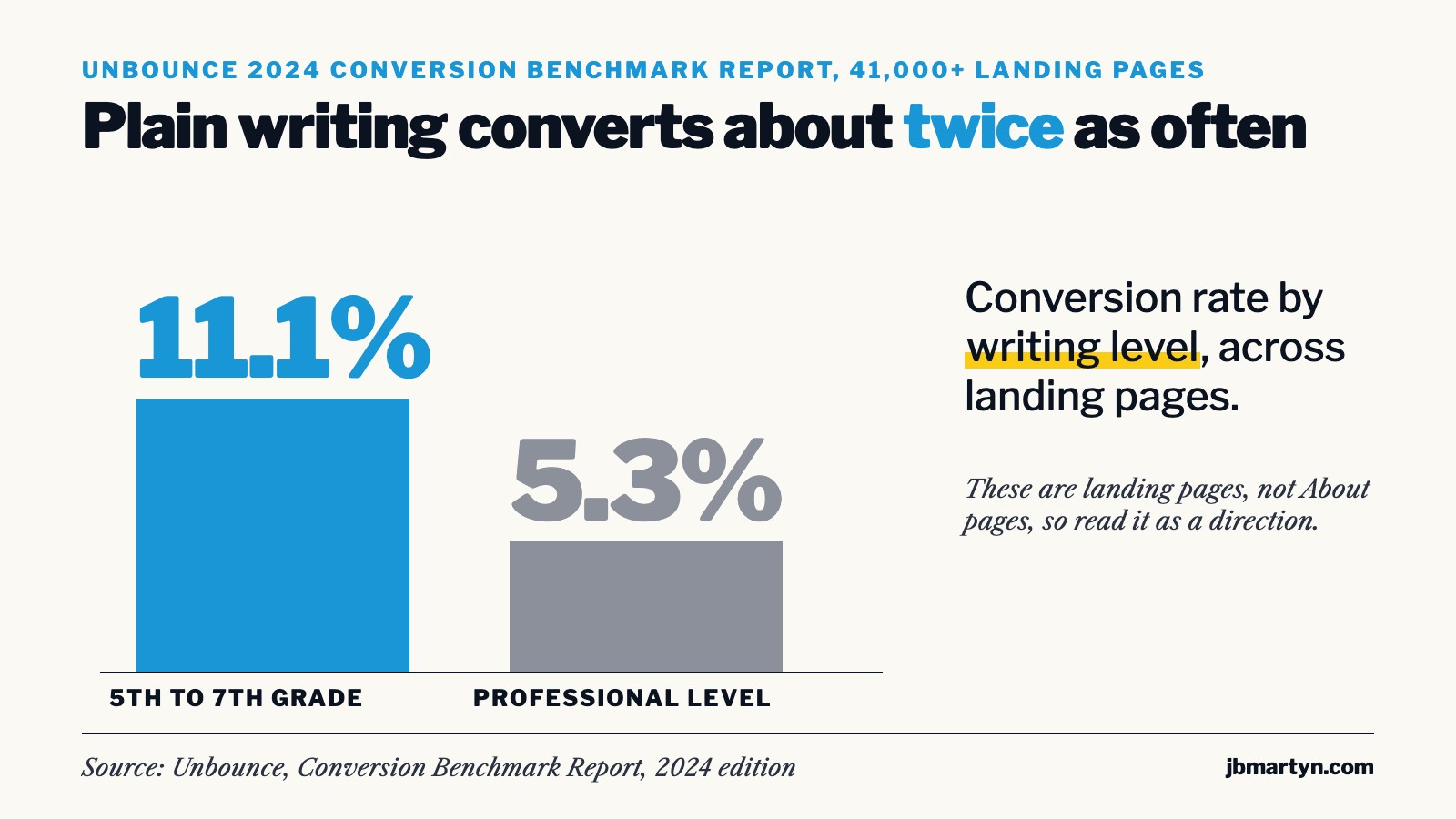
Plain writing roughly doubles the rate. Custom graphic.

A visitor deciding, in a few seconds, whether your page is worth another one. Photo: Pexels.
How Do You Write an About Page, Step by Step?
Write it in 6 parts, in this order: a headline about the client’s problem, a short intro on who you help, your proof, your story in a few lines, how you work, and 1 next step. Put the story fifth, not first, and cut it to what the reader needs.

Outline on paper first. It’s faster than fixing a page that started with your biography. Photo: Pexels.
1. Start with a headline about them, not you
“About Us” isn’t a headline, it’s a label. Write 1 line that names the person you help and the problem you solve.
2. Say who you help in 3 short punches
Henneke Duistermaat of Enchanting Marketing suggests a 3 punch intro: what you do, how you help, and 1 proof point. Skip labels like “expert” and “guru”.
3. Show proof before story
Orbit Media’s Andy Crestodina notes that on many top converting pages, one third to one half of the page is evidence, published January 8, 2025. That’s testimonials, named clients, results and reviews.
It matters because 94.2% of TrustedFirms.io’s respondents trust what outside sources say about a business over what it says about itself. Only real, approved quotes though. An invented testimonial is worse than none.
4. Tell the story short
This is the part everyone over writes. Give it 3 to 5 sentences that connect why you do this work to why the reader should trust you.
5. Explain how you work
What happens after they get in touch? A plain description of the first 2 or 3 steps removes the fear of the unknown, and keeps you and the client on the same page.
6. End with a single next step
1 button, 1 email address. If the page ends with 4 choices, most people take none, and I’d word the button in first person, like “Book my call”.
| Part | Its job | My rough length |
| Headline | Names the client’s problem | 1 line |
| Who you help | Lets them see themselves | 3 short sentences |
| Proof | Borrows trust from outside | 2 to 3 items |
| Story | Shows why you care | 3 to 5 sentences |
| How you work | Removes the unknown | 3 short steps |
| Next step | Makes the call easy | 1 button |
Worked example: the first screen of a bookkeeper’s About page
Here’s the opening of a made up page, before and after.
Before
“Welcome! We are a full service accounting firm with a passion for helping businesses thrive. Founded in 2009, we take a holistic, client first approach to everything we do.”
After
“Bookkeeping for consultants who would rather be consulting. I’m Dana. Send me your receipts on Friday, and by Tuesday you’ll have a clean report and a clear picture of what you owe.”
Same person, same service. The second takes about 5 seconds to read and answers all 3 questions.
Layout matters too, so if your About link is buried in the footer, that’s a site structure problem worth fixing alongside the words.
Should an About Page Have a Real Photo and Real Details?
Yes. A real photo, a real name and a few checkable details do more for trust than any adjective. Nielsen Norman Group’s eyetracking research found users ignore generic stock photos but study photos of real people who work at a company.
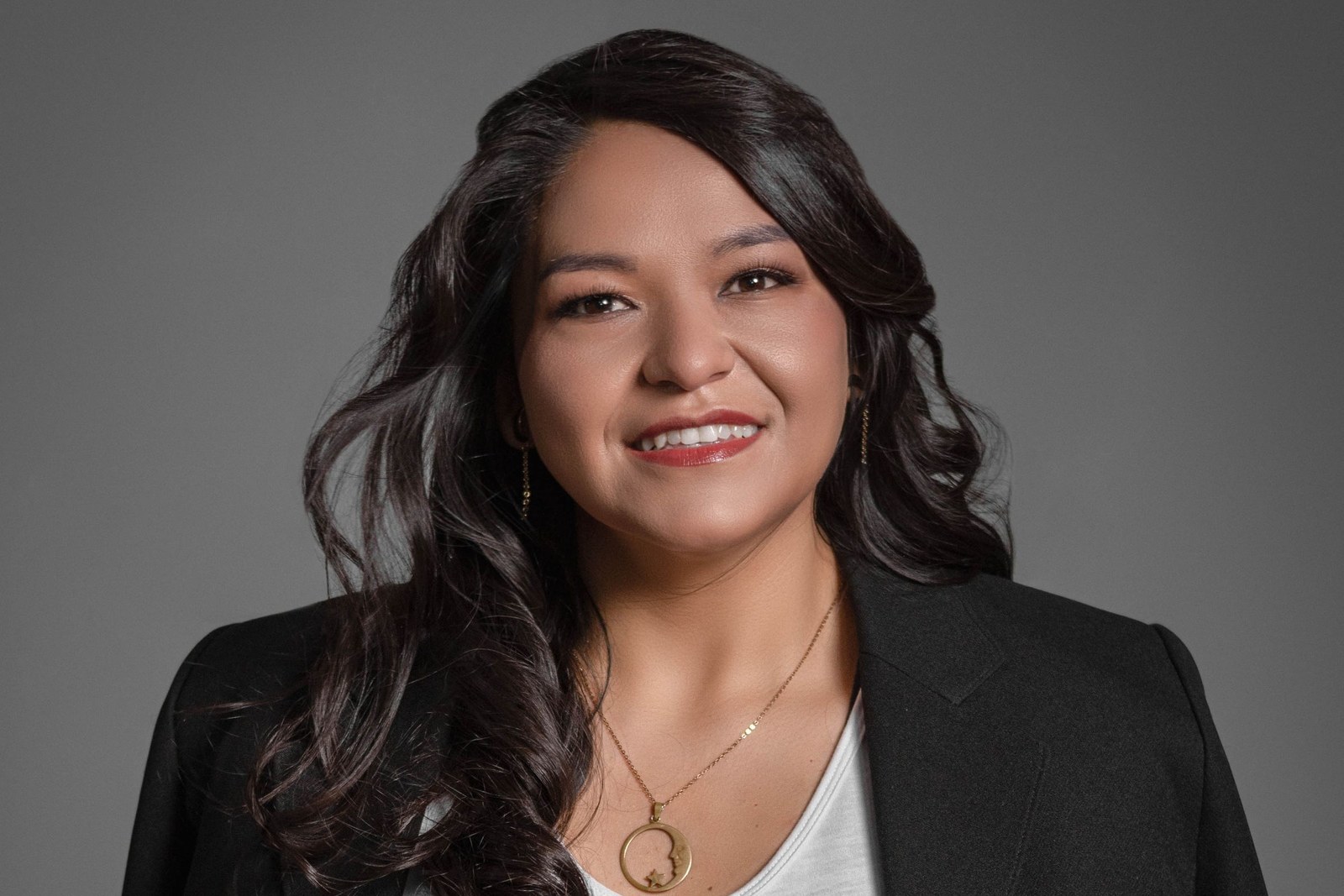
A clear, current headshot beats a logo every time. Photo: Pexels.
The proof is in NN/g’s photos article, first published October 31, 2010 and last reviewed in August 2026. On one staff page, a tester spent 10% more time on the portraits than on the bios, even though the bios took up 316% more space.
KoMarketing’s buyers said the same thing in plainer words: post photos of team members rather than a picture of your building.
| Detail | Why it helps | Careful about |
| A real photo of you | Shows the person behind the page | No stock photos, no AI headshots |
| Full name and role | Answers “who is responsible” | Match it to your LinkedIn |
| City or service area | Shows the business is real | Keep it accurate |
| Named reviews or clients | Outside voices beat your own | Only real, approved quotes |
| Email and form | Makes the next step easy | Check both work |
Duistermaat adds one more rule: face the reader or the content in the photo, never away from the page.
The need is real. In that TrustedFirms.io survey, 97.1% of Americans said they have worried that a business they found online might not be real.
A face, a name and a location are the cheapest answers to that worry, and skipping them leaves money on the table. And contact details matter most: 54% of KoMarketing’s respondents said missing contact information hurt a vendor’s credibility enough to make them leave.
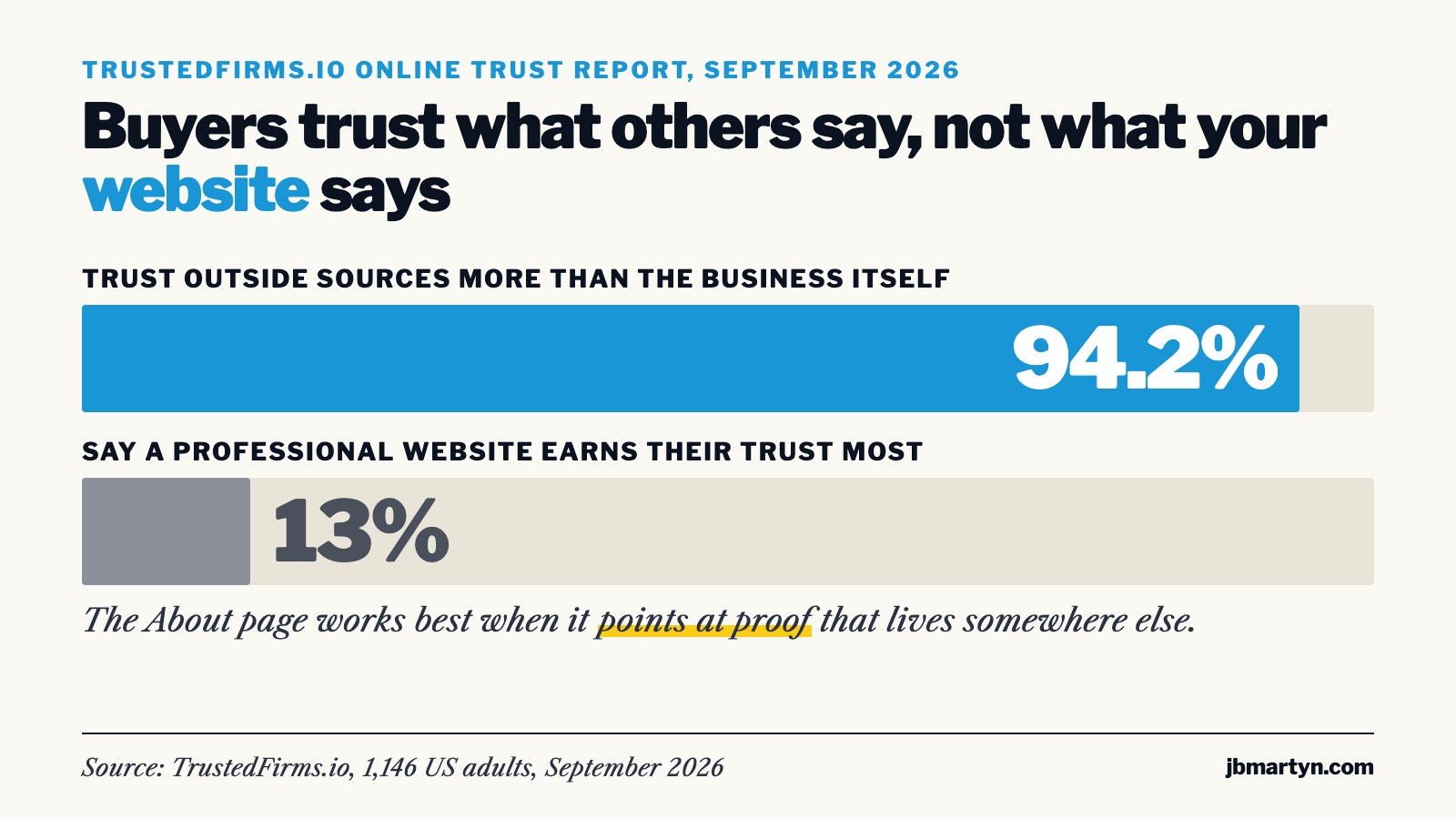
Why your About page should point at proof you don’t control. Custom graphic.
Does Your About Page Help You Show Up on Google and in AI Answers?
Indirectly, yes. Google’s guidance on helpful content asks whether it’s clear who created your content, and it points to an author page or an About page as one way to show it. A page with your name, your services and who you help, in plain sentences, gives people and crawlers the same facts.
Google Search Central’s guidance also asks you to explain how content was made, including whether AI helped, where readers would reasonably ask.
So if you draft with AI, say so where it matters, and keep the page human. Stuffing it with keywords is how you end up sounding like every other SEO page.
For a technical extra, Google’s ProfilePage markup lists an “About Me” page as a valid use. It needs a Person with a name, and recommends links to your other profiles, though Google doesn’t promise a rich result.
How Do You Know If Your About Page Is Working?
Run the 10 second test: show the page to someone who doesn’t know you, take it away after 10 seconds, and ask what you do and who for. If they can’t say it, rewrite the first screen before you touch anything else.
Here’s what to do, in order:
- Read your first screen on your phone. Most visitors see this part and nothing else.
- Count the sentences before the word “you”. If the page talks about itself for a whole paragraph, flip it.
- Check for 1 outside proof item. A review, a named client or a result, within the first 2 screens.
- Look at where visitors go next. In Google Analytics, see what people click after landing on About. If it’s nothing, your next step isn’t clear.
- Fix 1 weak line at a time. Go back to square one only if the first screen fails the test.
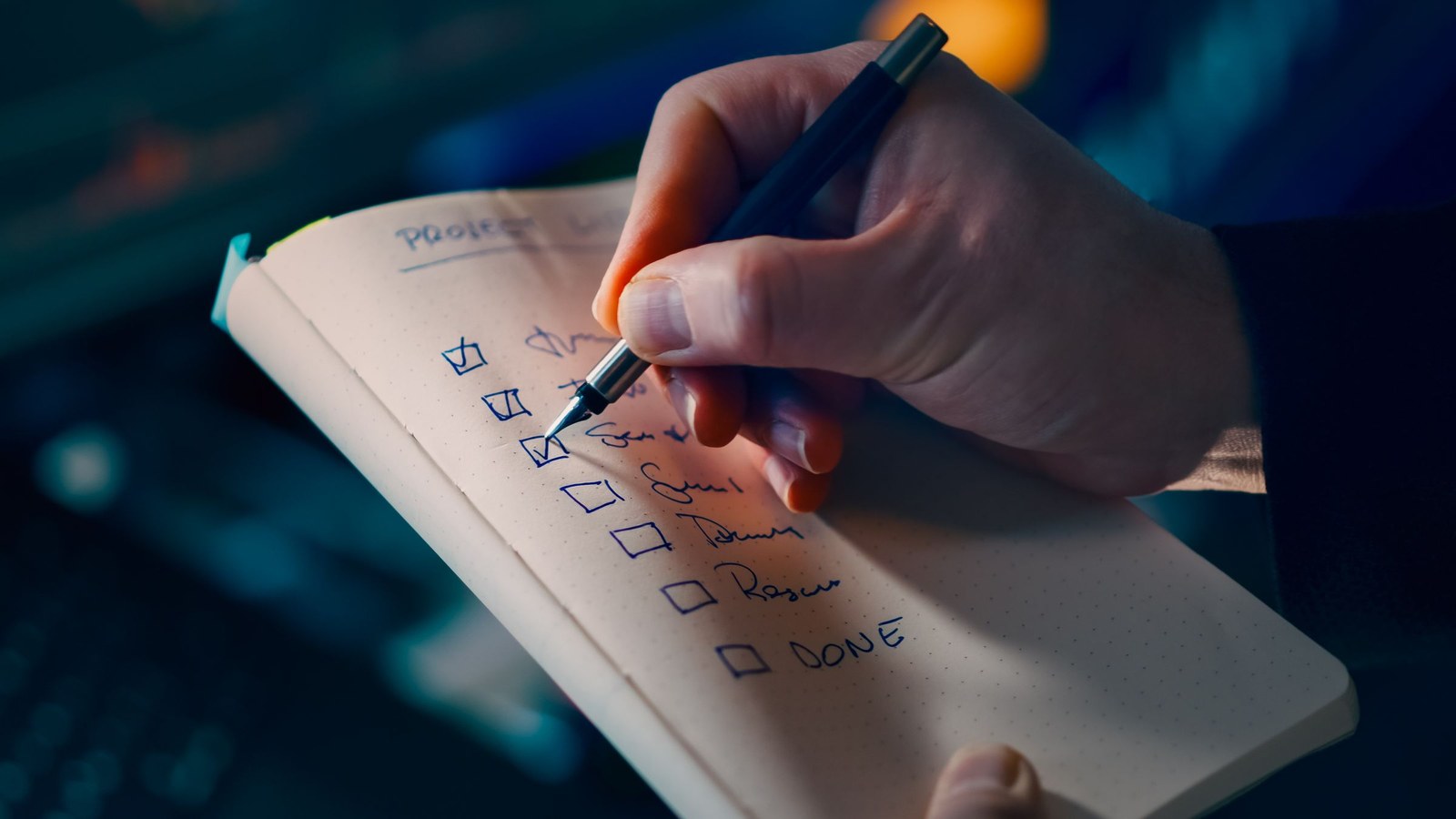
A short checklist beats a big redesign. Photo: Pexels.
Here’s where I’d start with any About page: write down the 1 client you’d love 10 more of. If you can’t, the page can’t either. If you’d like a second set of eyes (it’s the kind of work I do at JB Martyn), fill out the form here and tell me who that client is, or email me directly, and we can see what your page should say to them.
Real Questions About Writing an About Page, Answered
What should an About page include?
An About page should include who you are, who you help, proof you can solve their problem, and 1 clear next step. Nielsen Norman Group’s About Us report, built on 3 rounds of usability testing, shows visitors look for who the organization is, what it does and why it exists, and judge credibility fast.
How long should an About page be?
I’d keep it near 400 words, and the first 2 sentences matter most. Visitors skim the top of an About page for basics, according to Nielsen Norman Group, so put the answer to “who do you help” up top and let the rest support it. A longer page is fine if every extra paragraph earns its place.
What is the difference between an About page and an About Me page?
An About Me page is written in first person for a solo practice, while an About Us page speaks for a team, and both need to answer the same 3 questions: who you are, who you help, and what to do next. Google’s helpful content guidance asks that it be clear who created the content, whichever name the page carries.
Should an About page have a photo of you?
Yes, a real, current photo of the person behind the business builds trust. In Nielsen Norman Group’s eyetracking research, a tester spent 10% more time on staff portraits than on the bios beside them, while generic stock photos were ignored. Google’s guidance also warns against fabricated profiles such as AI generated headshots.
What reading level should an About page be written at?
Aim for a 5th to 7th grade reading level. Unbounce’s 2024 benchmark data on landing pages found writing at that level converts at 11.1%, while professional level writing converts at 5.3%. Short words, short sentences and you instead of we keep the page easy to scan, which is how most visitors read the top of it.
Does an About page matter for SEO?
Yes, indirectly. Google’s guidance on helpful content asks whether it’s clear who created your content and suggests linking to an author page or an About page to show it. The page won’t carry rankings alone, but it supports trust signals for the whole site, and it answers the question “is this business real?” for people and crawlers.
How do I write an About page when I have no clients yet?
Lead with the problem you solve and your relevant background, then show how you work. In TrustedFirms.io’s September 2026 survey, 87.7% of adults had passed on a business for lack of information online, so your name, process and a way to reach you matter more than a client list you don’t have yet. You can see samples of how I write to get the feel.
How do I know if my About page is working?
Check what visitors do next. BrightLocal’s 2026 survey found 54% of consumers visit a business’s website after reading positive reviews, so your About page is often the second stop. If analytics show people landing on it and leaving without clicking anywhere, the first screen isn’t answering “who are you” or “what now”. Run the 10 second test.